Jamaica / creative direction
Leave the bass in
Jamaican dub offers a practical lesson in creative direction. Can someone hear the change you asked an AI to describe?
StarApple AI Editorial · 21 November 2026
The mixing desk is part of the instrument
The Jamaica Information Service traces dub to engineers and producers working with reggae recordings in the late 1960s and early 1970s. Dropping a vocal, emphasising drums and bass or adding echo could give familiar recorded material a different shape. The choices at the mixing desk became part of the composition.
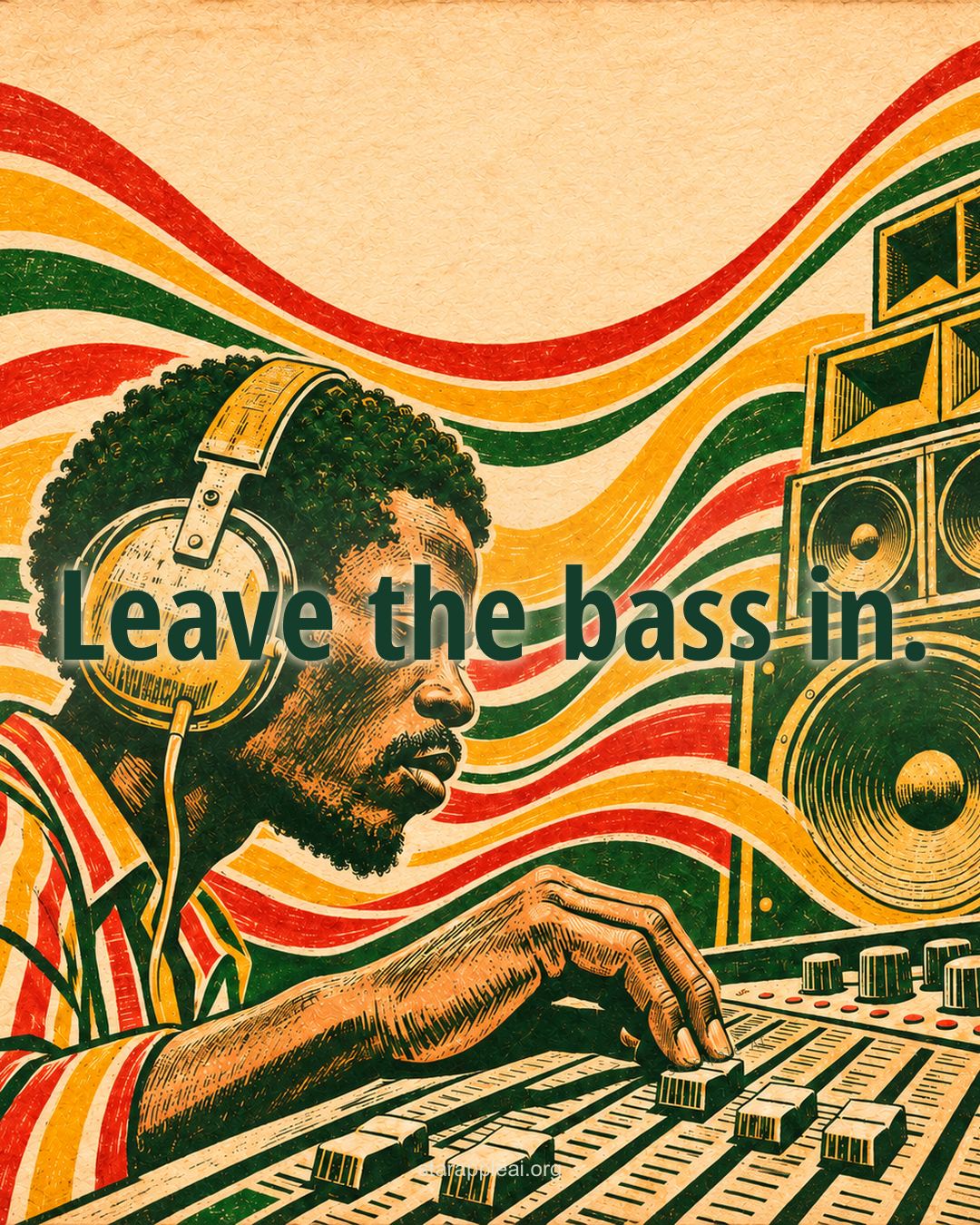
The original record-sleeve illustration on our cover imagines a session at that desk. For the exercise, make a short recording of your own. Eight bars with separate bass, drum and clap parts will do. Leave a copy untouched so that you can compare the two versions afterwards.
Give a direction that has a time and a sound
Keep the bass in every bar. Mute the drums for bar four. Put one echo on the clap on the last beat of that bar. Bring the drums back on the first beat of bar five. Those instructions give a listener something specific to hear. “Make it heavier” leaves several decisions unresolved.
Ask a text assistant for a cue sheet with the bar, the sound and the action in separate columns. You can inspect the sheet before opening an audio editor. Check that it keeps the bass going in bar four and gives the drums a return point.
Hand the listener the two versions
Make the edits on a copy of the loop. Play both versions to someone who has not seen the cue sheet. Ask them to tap where the drums return. If they tap the start of bar five, one part of the brief came through. Ask which sound continued through the gap to check another.
Keep the edit you like
A cue can be followed perfectly and still sound wrong to you. Try moving the echo or shortening its tail, changing only one thing at a time. Name the version you prefer and write down the audible difference. That note is a better brief for your next session than a string of adjectives.
Try it yourself
Write a cue sheet for my original eight-bar loop. Keep the bass throughout. Mute the drums for bar four only. Echo the final clap of bar four once. Mark the drum return on the first beat of bar five.