How much of the gift is yours?
Turn details you remember into a puzzle, a thank-you or a song.
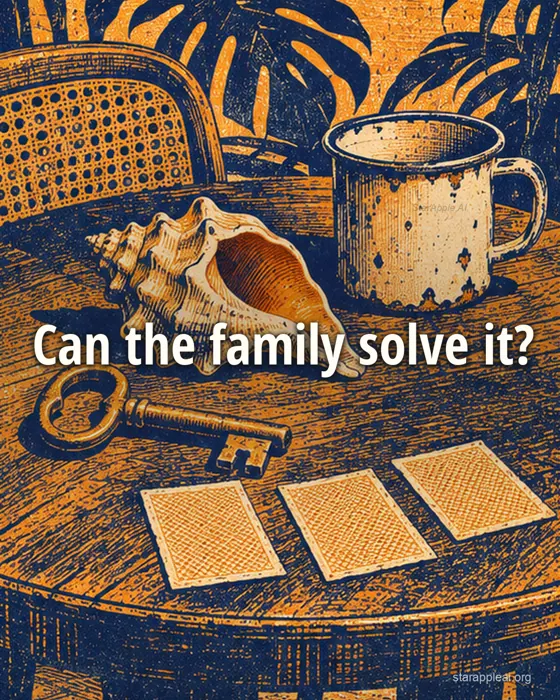
Can your family solve your puzzle?
A puzzle needs enough information for someone to solve it. AI can write clues that allow two answers or no answer. Start with three people and three objects. Write every possible arrangement to check the result.
Ask a friend to solve the puzzle without your help. Record where they get stuck. Repair unclear clues before sharing it. You can use a family joke as the theme, but guests still need the information required to solve it.
Try the prompt
Help me write an original puzzle with three people and three objects. Use this interest: [interest]. Give every rule and clue. Provide an answer key. Show why no other answer fits. Avoid private family facts. I will test the puzzle before sharing it.
Read the teaching card text
Try this tiny example.
Ada, Ben and Cleo each receive one different gift: a book, a mug or seeds. Ada gets the book. Ben does not get the mug. Who gets the seeds?
Person | Gift clue
Ada | Book
Ben | Not mug
Cleo | Unknown
sample puzzle; each gift used once
Test it without coaching.
Ben gets seeds. Cleo gets the mug. Ask someone to solve your own puzzle without help. If two answers fit, repair a clue.
Person | Answer
Ada | Book
Ben | Seeds
Cleo | Mug
Unique solution to supplied clues
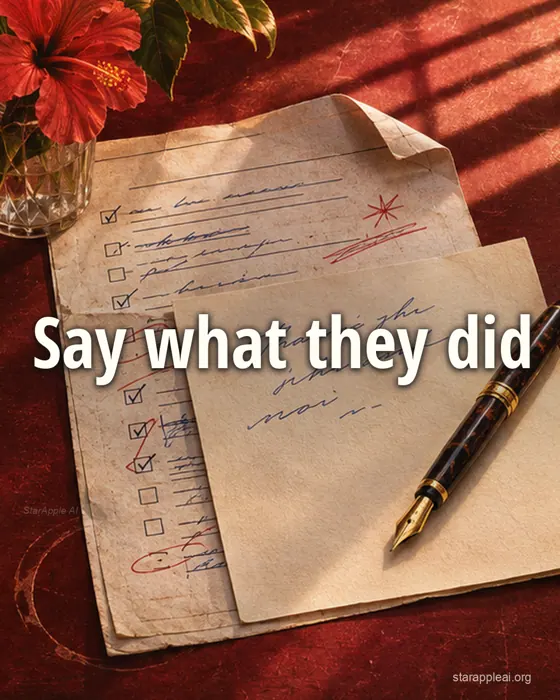
Make the thank-you sound like you.
A personal thank-you names what the person did. Start with a real event. The worked example here thanks someone for interview practice. Replace it with your own memory.
Ask AI to shorten your draft. Read the result aloud. Remove words you would never say. Check that the tool has not added a promise or an event. A plain sentence about something real gives the recipient more than a paragraph of general praise.
Try the prompt
Shorten my thank-you to about 50 words. Keep the event I described. Keep my tone. Do not add memories or promises. Give one version. Identify any sentence that sounds formal.
Read the teaching card text
Sunday interview practice | Your questions helped me explain | Thank you for practising
sample thank-you example.
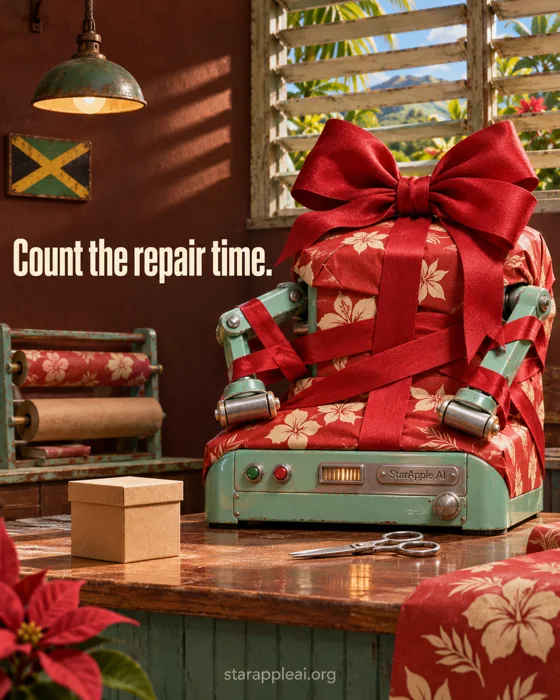
The eight-minute draft took twenty-three minutes.
The wrapping machine has tied itself in a bow. The customer’s box is still on the counter. An eight-minute draft can likewise need fifteen minutes of checks and repairs. In this worked example, drafting, checking and repairing the output takes twenty-three minutes. The usual method takes thirty. The saving is seven minutes.
Record drafting time separately from checks and repairs. Include failed attempts in the log. Compare work that meets the same quality requirement. An AI Officer manages the team’s AI work. This person can use the records to decide whether to expand a trial.
Try the prompt
Make a blank task log. Include usual-method minutes, AI drafting minutes, checking minutes, repair minutes and result accepted. Calculate savings using all the time you spent using and checking the tool. Include failed attempts. Do not estimate savings without recorded timings.
Read the teaching card text
The eight-minute draft took twenty-three minutes.
sample task: usual method, 30 minutes. AI drafting took 8 minutes. Checks and repairs took 15. Total with the tool: 23 minutes. Both results must meet the same quality requirement.
Usual method | AI draft | Checking + repairs | AI total
Values: 30, 8, 15, 23
sample minutes; total= 8 + 15; saved= 7

Make a song they will recognise.
A personal song starts with details the recipient will recognise. Write a shared memory before opening a music tool. Keep private information out of the service. Ask AI to help shape the lyrics. Then check every line against your memory.
Describe the music with instruments and speed. Listen to the complete recording before giving it. Check the service’s current rules for your intended use. A familiar name pronounced incorrectly can spoil the message.
Try the prompt
Use these true, non-private details to draft a short verse and chorus. Do not invent events. Suggest instruments and tempo. Do not name an artist to copy. Mark any line that needs a personal detail from me.
Read the teaching card text
Detail | Example
Hobby | Gardening
Phrase | One more row
Memory | Sunday planting
sample song brief
Write lyrics before choosing a sound.
Write three true details about the person. Ask AI for a verse and chorus. Read the lyrics aloud. Remove lines that could describe anyone.
Your notes | Verse and chorus | Read aloud
Suggested lyrics workflow
Describe the music directly.
Describe instruments and tempo. Tempo means the speed of the music. Do not request a named singer’s voice. Do not copy someone’s voice without permission.
Sound detail | Your brief
Instrument | Acoustic guitar
Tempo | Relaxed
Mood | Cheerful
Original sound brief; no singer imitation
Listen before you give it.
Suno Custom mode accepts your lyrics. Check the service’s current terms and download options. Listen to the whole recording. Check names and altered words.
Words correct? | Name pronounced? | Ending complete?
Listen to the whole recording
Sources and tool guides
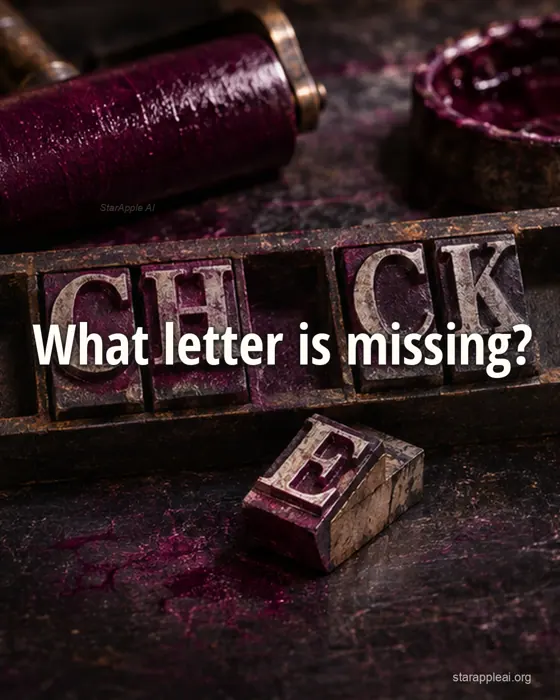
One missing letter. One useful check.
The missing letter is easy to find. The next part needs more thought. Name the first check you would make before using an AI answer. A bill needs arithmetic. A quotation needs its original passage. A deadline needs the message that set it.
Try the puzzle with a friend. Give each other a different task. If the answer is “check everything”, ask which action comes first. The answer should name evidence you can inspect.
Try the prompt
Name the first check for this AI answer: [answer]. Identify the original evidence I need. Do not claim to have opened a file unless you did. Do not claim to have tested a number unless you did.
Read the teaching card text
CHECK. Now say what you would check.
The missing letter is E. For a bill, recalculate the total. For a quotation, open the source passage. For a deadline, check the original message.
Task | Check
Bill | Recalculate
Quotation | Open passage
Deadline | Original message
Answer: CHECK; missing letter E
What will your agent do while you are away?
An automated task can continue while its usual reviewer is away. Open the service that runs it. Check the next scheduled action. Review its permission to send messages or spend money. Pause work that nobody will monitor.
If someone takes over, show them how to stop the task. Agree when they should do so. Menus differ between products. Check the actual settings after requesting a pause. A message saying “stop” does not confirm the task has stopped.
Try the prompt
Make a holiday checklist for these automations: [non-sensitive list]. Ask for each next run. Ask who will monitor it. Identify actions that need permission. Ask how to pause it. Do not change settings. Mark product-specific steps for me to verify.
Read the teaching card text
Review | Ask
Next action | When will it run?
Owner | Who sees alerts?
Pause | Is it stopped?
Verify in the actual service

Save the recipe without guessing the quantities.
A family recipe can contain details that nobody wrote down. Ask which spoon the cook uses. Ask what “medium heat” means on their cooker. Ask how the finished dish should look. Record only with permission.
AI can organise those notes. The cook must settle missing quantities. Keep each gap visible until they answer. Print one proof page before making the booklet. Agree who may receive it, especially if it includes family stories or photographs.
Try the prompt
Organise these approved cooking notes into ingredients, equipment and numbered steps. Preserve the stated quantities. Mark missing amounts, temperatures or timings [ask cook]. Do not invent storage advice. List inconsistencies for us to resolve.
Read the teaching card text
Cook says | Ask
One spoon | Which size?
Medium heat | Which setting?
Until ready | What should I see?
Illustrative questions, not cooking advice
Keep unknown quantities visible.
Ask AI to organise your notes. Mark uncertain quantities [ask cook]. Do not accept a plausible amount as the real recipe.
Draft field | Status
Amount unclear | Ask cook
Timing absent | Ask cook
Leave unknowns visible
Check one recipe before adding six.
Read one draft with the cook. Confirm the quantities. Check the sequence. Omit food-storage advice unless you have checked appropriate guidance.
One recipe | Cook checks | Resolve gaps
Suggested review process
Print a proof copy.
Print one page. Check that the text is readable. Match the ingredient list to the steps. Ask the cook to approve the booklet.
Readable text | Ingredients match steps | Cook approves
Check a printed proof