Where did that answer come from?
Test a claim, inspect a source and keep evidence of your own contribution.
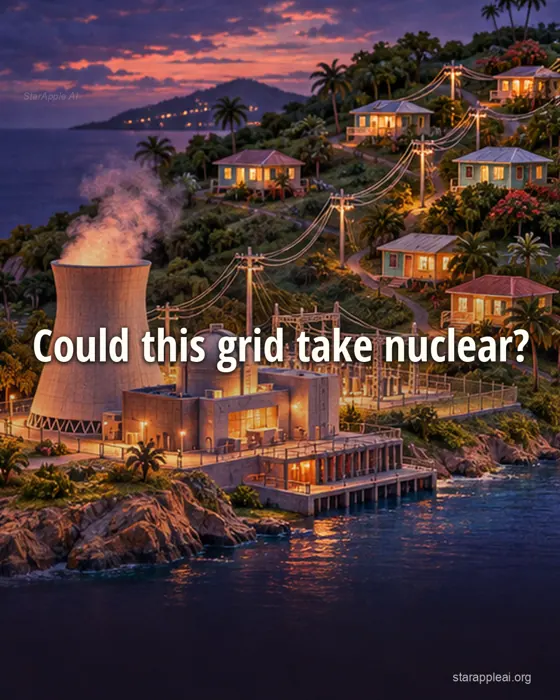
Would nuclear power fit your country?
Would nuclear power fit your country? Use AI to investigate one proposed plant. Compare it with another reliable electricity system. Check every important number against an original source. State your conclusion: yes, no or not yet. Explain what could change it. MW means megawatts, a measure of power. GWh means gigawatt-hours, a measure of energy.
Try the prompt
Assess a nuclear option for [country]. Ask for missing information first. Find official electricity demand data. State the year and units. Compare a proposed plant with an alternative that supplies equivalent service. Separate construction, financing, operation, waste and decommissioning costs. Assess grid connection, cooling water and site risks. Include the expected delivery date. Mark assumptions. Leave unknown values blank. Link each claim to its original source. Give evidence against the conclusion.
Read the teaching card text
Decision | Evidence
Yes, no or not yet | Demand, cost and grid fit
Research challenge
Start with the local grid.
Choose one country. Find its annual electricity use. Find its highest power demand.
Measure | Unit
Power at one time | MW
Energy across a year | GWh
1 MW = 1,000 kW. 1 GWh = 1,000 MWh.
Check the output calculation.
Capacity factor compares actual output with continuous full-power output. This example assumes 100 MW of net electrical capacity and a 90% capacity factor. It uses a non-leap year. Grid losses are excluded.
100 MW × 8,760 h × 0.90 | 788,400 MWh = 788.4 GWh
Assumed example, not a real plant estimate.
Compare complete options.
Compare systems that supply electricity when people need it. Show the missing evidence.
Cost or risk | Include
Budget | Construction and financing
Reliable supply | Backup and grid connection
Long-term duty | Waste and decommissioning
Local conditions | Water and site risks
A research exercise, not a feasibility study.
Sources and tool guides
Test the new model before you switch.
A new model may need different corrections. Test it on a task with a known answer. Use the same input for both models. Count the repairs before you switch. This exercise does not report a completed model test.
Try the prompt
Solve this practice order: three items at US$12 each, plus US$4 delivery. Show the calculation. Give the total in US dollars.
Read the teaching card text
3 × US$12 + US$4 = US$40
Three items plus delivery. Known total: US$40.
Keep the input the same.
Use one public or safely anonymised file. Give both models the same instructions. Request the same output format.
Input | Model A | Model B
Order | Same order | Same order
Question | Total with delivery? | Total with delivery?
Output | Number + calculation | Number + calculation
Only the model changes.
Count the repairs.
Count wrong facts. Record missing steps. Measure checking and repair time.
Check | A | B
First answer | US$36 | US$40
Missing delivery | Yes | No
Checking + repairs | 3 min | 1 min
Invented example, not a model benchmark.
Keep the better result.
Compare the final usable answers. Include checking time. Record the model version and test date.
A: 1 + 3 = 4 minutes | B: 2 + 1 = 3 minutes
sample total task time = drafting + checking and repairs.
Sources and tool guides
52% of sampled Claude chats involved collaboration.
Anthropic classified 52% of sampled Claude.ai conversations as augmentation. This category includes learning, feedback and repeated improvements. It classified 45% as automation. These figures describe conversations on one service. They do not count jobs replaced. Ask AI for feedback on your next draft. Check each proposed change.
Try the prompt
Review this draft. Identify unclear claims. Ask for missing evidence. Do not add new facts.
Read the teaching card text
Working with AI | Delegating tasks to AI
Values: 52, 45
Share of sampled Claude.ai conversations, November 2025. Other categories excluded. Source: Anthropic Economic Index, January 2026.
Sources and tool guides
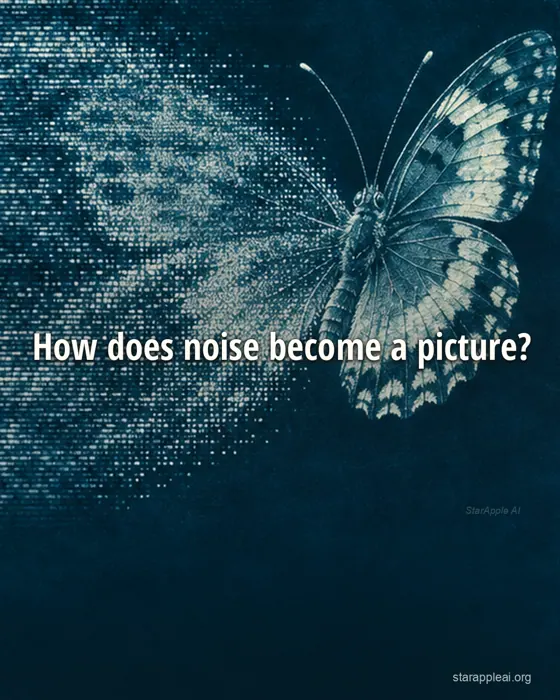
How does noise become a picture?
Diffusion models learn from noisy examples. During generation, they change noise into a new image. Current image tools can use different designs. Inspect every finished image before sharing it.
Try the prompt
Create one image of [subject]. Use a simple background. Keep the main objects separate.
Read the teaching card text
Noise | Gradual changes | New image
Simplified diffusion diagram.
Training starts with examples.
Training adds noise to example images. The model learns to estimate that noise.
Example image | More noise | Mostly noise
Simplified training process.
Generation starts with noise.
The trained model changes the starting noise in steps. An image takes shape.
Starting noise | Gradual changes | New sample
Simplified generation process.
There is no hidden original.
The model creates a sample. It does not reveal a photograph behind the noise.
Training example | Generated sample
Light bulb | Butterfly
Different images separate training from generation.
Check the finished picture.
Count the objects. Read every word. Inspect shapes that should join.
Possible error | Check
Extra finger | Count the fingers
Broken handle | Trace the outline
Wrong label | Read the text
Practical check: StarApple AI.
Show your work before your appraisal.
Collect the records behind your achievements. Remove confidential details. Ask AI to organise your evidence. Mark any result that needs proof. Keep your work separate from the team’s work. Do not invent improvements.
Try the prompt
Use only these notes. Create columns for contribution, my role, result, date and evidence. Mark missing information. Separate my work from the team’s work. Do not invent numbers or praise.
Read the teaching card text
Contribution | Result | Evidence
Wrote a guide | Team used it | Dated team feedback
worked example. Personal and team contributions must remain separate.

Find five useful answers in your documents.
A research notebook can help you examine a folder of documents. Use only documents you can upload. Keep confidential files in an approved service. Google’s Gemini Notebook can answer questions about your sources. Open every cited passage. A real citation can still fail to justify an answer. The denominator is the total you compare against. Here, it is the number of orders.
Try the prompt
Compare [policy A] with [policy B]. List the changed clauses. Quote each relevant passage. Give its source name. Mark any uncertain comparison.
Read the teaching card text
Permitted sources | Compare clauses • Trace decisions | Ask questions • Read charts • Check claims
Keep confidential files in an approved service.
Compare two policies.
Request the changed clauses. Ask for a quotation from each version. Check both original passages.
Clause | Old policy | New policy
Return window | “Return within 14 days.” | “Return within 30 days.”
Changed: 14 to 30 days. Open both original clauses.
Trace a decision.
Arrange dated notes in order. Separate proposals from decisions.
3 Nov: Saturday opening proposed | 7 Nov: One-month trial approved | 10 Nov: Trial opening starts
A proposal is not a final decision.
Prepare better questions.
Ask which facts the report leaves out. Take these questions to the report owner.
Report says | Question to ask
Sales increased | Compared with which period?
Customers were happier | How many responded?
AI saved time | Did checking time count?
Bring missing details to the report owner.
Explain a chart.
sample October returns per 100 orders. Returns come from those same order groups. Check the units and the total used for each rate.
Shop A | Shop B
Values: 5, 2
A: 5/100 orders. B: 10/500. Start axis at zero.
Find missing evidence.
Ask which source provides evidence for the claim. Leave the claim unverified if no source provides evidence.
Claim | Uploaded evidence
Sales doubled | January sales only
Missing: earlier-period sales. Claim remains unverified.
Sources and tool guides
Would you check an answer you agree with?
A 2025 survey asked 319 regular AI users about their work. Greater trust in AI was associated with less reported critical-thinking effort. This association does not prove a loss of intelligence. Write your answer before using AI. Then test where the answers disagree. The cover charts are decorative, not study data.
Try the prompt
My provisional answer is [answer]. Identify the strongest evidence against it. Give the original source. Mark any claim you cannot verify.
Read the teaching card text
First thought | Question to test
Saturday opening will help. | Will extra sales cover costs?
Write your view before reading the AI answer.
The study asked 319 workers.
Workers described 936 work examples. Greater confidence in AI was associated with less reported critical-thinking effort.
319 workers | 936 reported work examples | AI confidence + reported thinking effort
Source: Lee et al., CHI 2025. Self-reported survey.
The survey cannot show a loss of intelligence.
The survey records workers’ experiences. It cannot establish that AI caused a lasting decline in thinking.
Explanation 1 | Explanation 2
Trust may reduce checking. | Easier tasks may raise trust.
| Easier tasks may reduce checking.
The survey does not establish what caused the association.
Try a contrary case.
Write your answer before asking AI. Request the strongest evidence against it. Open the source yourself.
Provisional answer | Evidence to check
Extra hours will pay. | Actual Saturday sales
Check the contrary case. | Staff and electricity costs
Compare additional revenue with additional costs.